


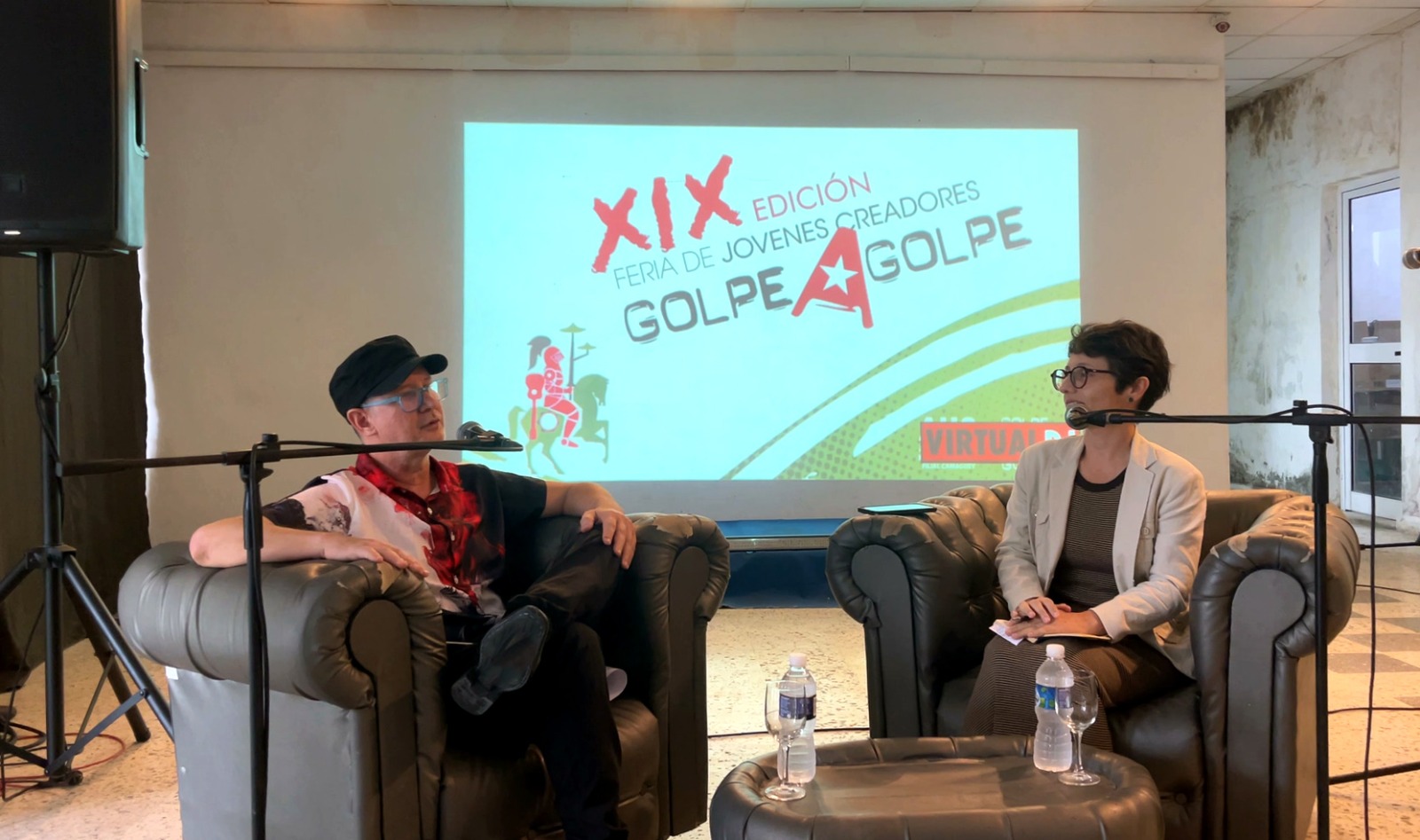
CAMAGÜEY.- We were at La Comarca, a space where words, images, and conversation meet, within the framework of the Golpe a Golpe Young Creators Fair—an initiative that is not just an event, but a way of insisting on art as a collective gesture, even in difficult times.
We spoke with Reynaldo Pérez Labrada, who signs many of his interventions as RPLabrada, a synthesis that is more than nominal. Trained as a journalist, he was very early on shaped by the audiovisual as a way of thinking, of accompanying young people, and of making culture visible.
His career converses with a tradition of commitment—the one defended by Alfredo Guevara—where creating is not only about producing works, but about opening paths, building bridges, and trusting new generations.
This is not a list of achievements, but a conversation about the challenges of yesterday and today: learning when access was scarce, accompanying without imposing, and communicating Camagüey’s culture in a present marked by speed, social media, and the urgency of not disappearing from the symbolic map.
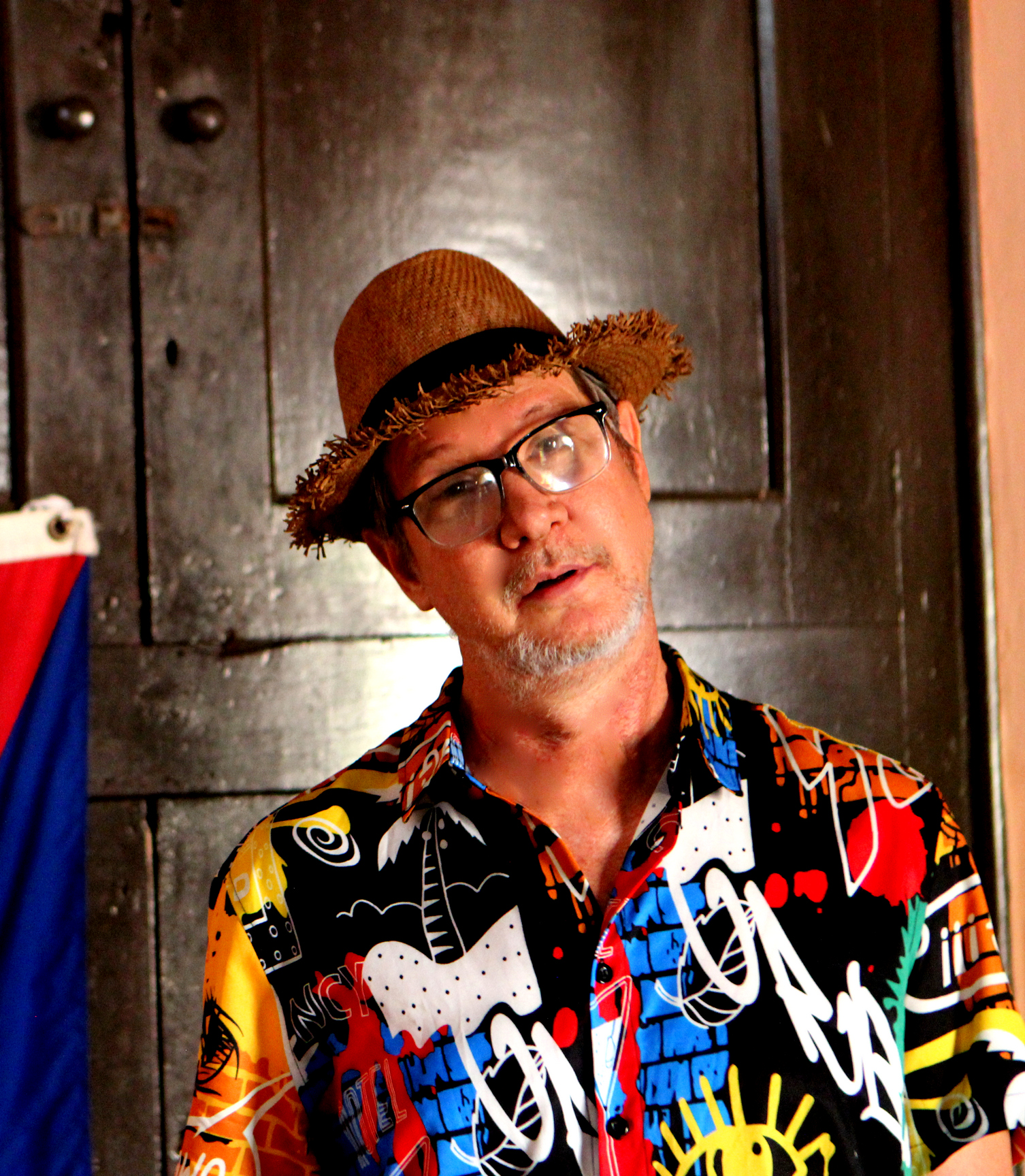
—You trained as a journalist, but you chose the audiovisual path. When do you feel that moving images become your main language, and what resistance did you encounter along the way?
—My story doesn’t begin when I entered university. Camagüey was—and still is—a very strong audiovisual hub. There were film clubs, Luciano Castillo’s cinematheque, spaces where watching cinema also meant thinking about cinema. It wasn’t like now, when the film ends and everyone leaves. Back then you knew you’d be questioned, that you had to argue your ideas, and that shaped critical thinking.
“Later, at university, my first hands-on encounter with audiovisual work was almost traumatic. A professor handed me a camera because the cameraman had left, and I knew nothing. I filmed thinking that editing happened inside the camera itself. When I got to the editing room, they told me it was useless. The camera was incredibly heavy, and there was no margin for error: either you learned fast or they took the camera away from you. I didn’t want to be ‘the green rookie,’ and that forced you to study, to take responsibility for what you were doing.”
After that came the Hermanos Saíz Association, organizational work, the Sponsorship Committee, negotiating resources, mediating tensions. All of that was also part of the learning process: understanding that doing audiovisual work isn’t just about creating, but about sustaining processes.
—As a student, what was access to film studies and hands-on audiovisual learning like? What differences do you see with young people today?
—Today everyone can film because they have access to technology, and that’s a huge advantage. But it also comes at a cost. Before, since the camera was only available on a specific day and at a specific time, you couldn’t improvise: you had to research, write a script, do table work. Now people film with a cellphone and often skip that process.
“It’s not that technology is bad, but not only the medium has become cheaper—often the content has too. Reels are replacing deeper works. Not always, but it happens. And there’s a loss of rigor there.”
—Alfredo Guevara spoke of cinema as thought and as accompaniment for young people. How do you strike that balance between guiding and not imposing?
—I never imagined myself presiding over the Hermanos Saíz Association, much less for eleven years. But I understood that the president’s role is essentially that of a producer: someone who facilitates, who solves problems, who accompanies so that others can create.
“In those years it was very hard to film. That’s why it became vital to negotiate support with television, to open spaces, to bring in experiences like those of the International Film and Television School of San Antonio de los Baños or Televisión Serrana. That exchange wasn’t just enriching—it was necessary.”
“I also think I’ve been lucky to live in a city with a strong audiovisual tradition. Camagüey isn’t just about cameras: it’s architecture, history, atmosphere. All of that shapes your gaze and makes you understand that you don’t always have to leave in order to create.”
—In a context of scarcity, hyperconnectivity, and economic urgency, how do you defend depth and critical thinking through audiovisual work?
—This is where I go from hero to villain. Being young doesn’t automatically make you right, and belonging to an organization doesn’t turn you into the vanguard. The vanguard is defined by the work and, above all, by time.
“Before, there was strong, constant criticism. They told you what worked and what didn’t. There were figures like Rufo Caballero. Today you do anything and everything gets validated. But criticism isn’t about stinging—it’s about guiding, about telling you where you’re headed.”
“There’s also a mistaken idea that the more incomprehensible a work is, the more avant-garde it must be. That’s false. You don’t decide the vanguard—the context does, and the coexistence of works at a given historical moment.”
—Do you think more audiovisual content is being made today than cinema? What does that mean for culture?
—Throughout the history of media, the death of the previous one has always been announced, and it never happens. Cinema is not going to disappear. Nothing replaces the experience of a theater, a big screen, immersive sound.
“New formats coexist with cinema. A reel can be trivial, but it can also be a political, communicative tool. Life imposes its own dynamics. In the end, as my Art History professor used to say, everything passes: art is what remains. It doesn’t matter whether you physically knew Tarkovsky or Chaplin; what matters is that their works are still speaking to us.”
“The work stops belonging to you and becomes part of time, if criticism fulfills its role.”
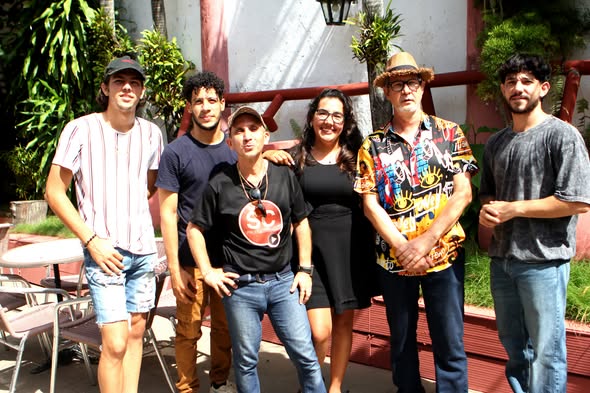
—Mi Camagüey Streaming has managed to make local artists and cultural processes visible. Is that a communicative necessity or a cultural stance?
—That’s possible because Camagüey has an intense cultural life. There’s always something happening here. There’s talent, diversity, voices that aren’t always visible, but they exist.
“Culture doesn’t belong only to institutions or cultural workers. It lives in ordinary people. Sometimes someone you don’t know says something that forces you to listen, to learn. Camagüey is a ‘gentle comarca,’ as Guillén said, but with enormous cultural density. Many creators who are now in Havana come from here, and that says a lot too.”
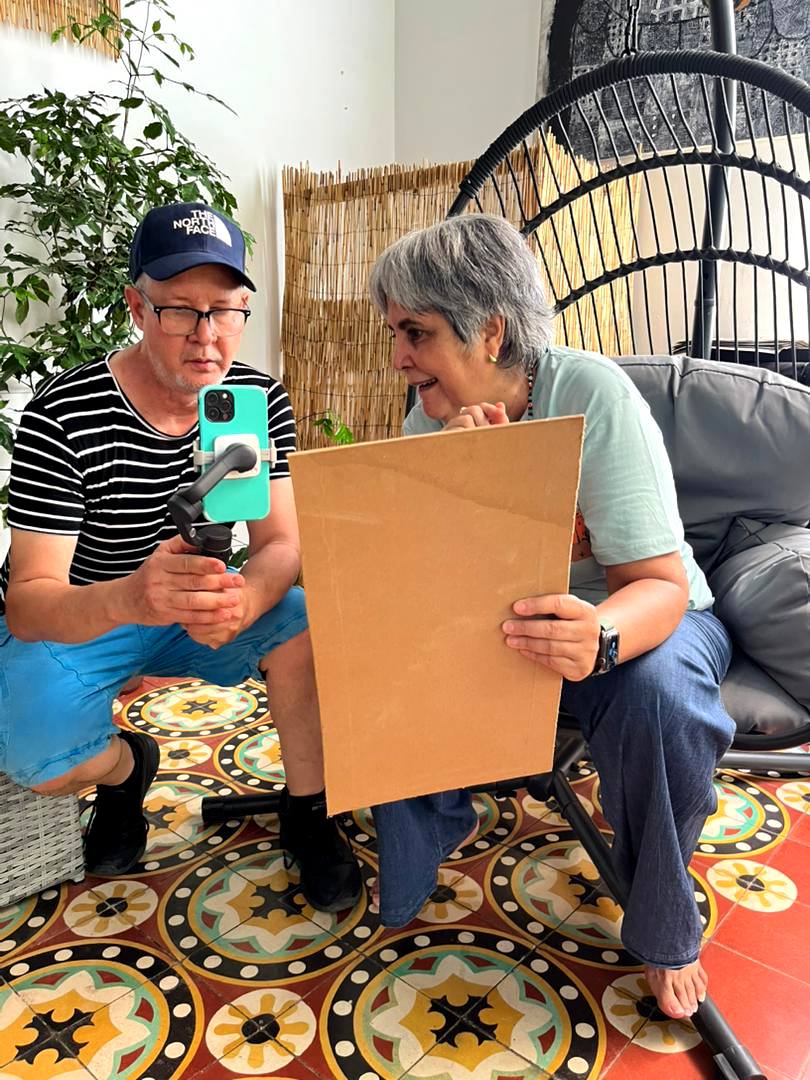
—If audiovisual work is a form of memory, what would you like to remain from this time, and what do you hope young people dare to tell?
—Young people are going to create with us or without us. That’s inevitable. What matters is accompanying them, advising them, preventing everything from turning into chaos. Even a mistake can become valuable over time, but creation has to leave something behind.
“Art should provoke spiritual growth. When you encounter a work, you should feel that something passed through you. For that, you need criticism, spaces of legitimacy, teachers who guide, responsible decision-makers.”
This encounter was, in a way, a passing of the torch. Golpe a Golpe is exactly that: a fair where questions matter just as much as answers. And this conversation reminded us that making art, communicating culture, and accompanying processes remain, above all, acts of faith in the future.
Translated by Linet Acuña Quilez