
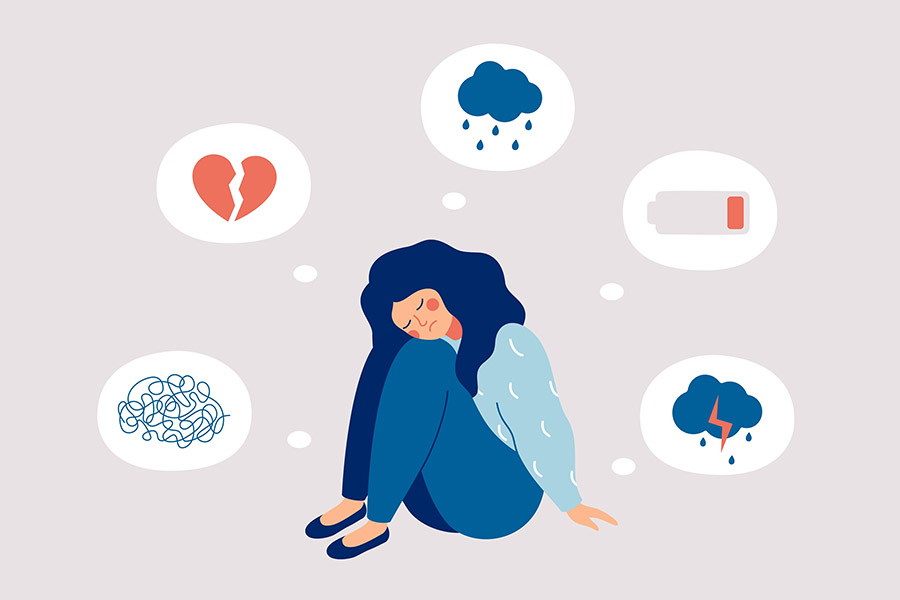
Clinical depression, or major depressive disorder, is a serious and common medical condition that negatively affects how a person feels, thinks, and behaves. It is essential to distinguish it from normal sadness or temporary discouragement, which everyone experiences after a loss or a disappointing event.
Unlike sadness—which is a fleeting emotion and a natural response to life circumstances—depression involves a persistently low mood or a loss of interest or pleasure in activities once enjoyed. These symptoms last for at least two weeks and significantly interfere with daily life.
Although it does not have a single cause, depression is believed to result from a complex interaction of factors, including:
Changes in brain chemistry, particularly in the function of neurotransmitters such as serotonin and dopamine. A family history of depression increases risk. Chronic stress, trauma, abuse, or significant losses. Negative thinking patterns or low self-esteem.
To be diagnosed, depression must involve a combination of several symptoms, most of which are present nearly every day: Feeling sad, empty, or hopeless most of the day. A marked loss of interest or pleasure in all or almost all activities. Significant weight gain or loss without dieting, or noticeable changes in appetite. Sleep disturbances: insomnia (difficulty sleeping) or hypersomnia (sleeping excessively). Observable agitation (restlessness) or psychomotor slowing. Persistent fatigue without an apparent cause. Excessive or inappropriate feelings of guilt or diminished self-worth. Decreased ability to think, concentrate, or make decisions. Recurrent thoughts of death, suicidal ideation without a specific plan, or a suicide attempt.
Depression is a treatable illness. The earlier help is sought, the sooner the recovery process can begin.
Treatment often requires a personalized, combined approach. If you or someone you know is experiencing symptoms of depression, it is vital to seek help from a mental health professional. Depression is a real illness, and proper treatment can make a profound difference in quality of life.
Translated by Linet Acuña Quilez