
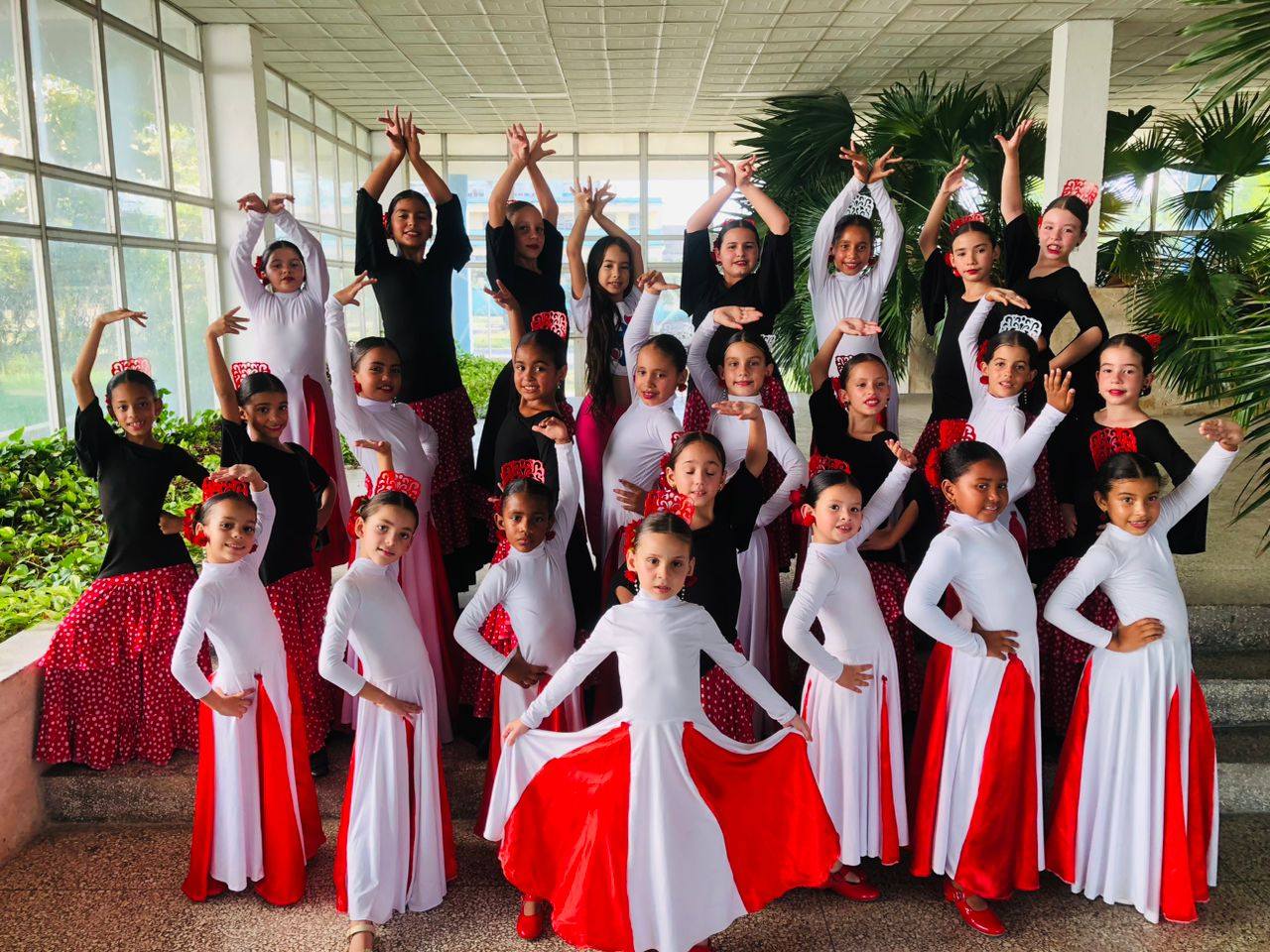
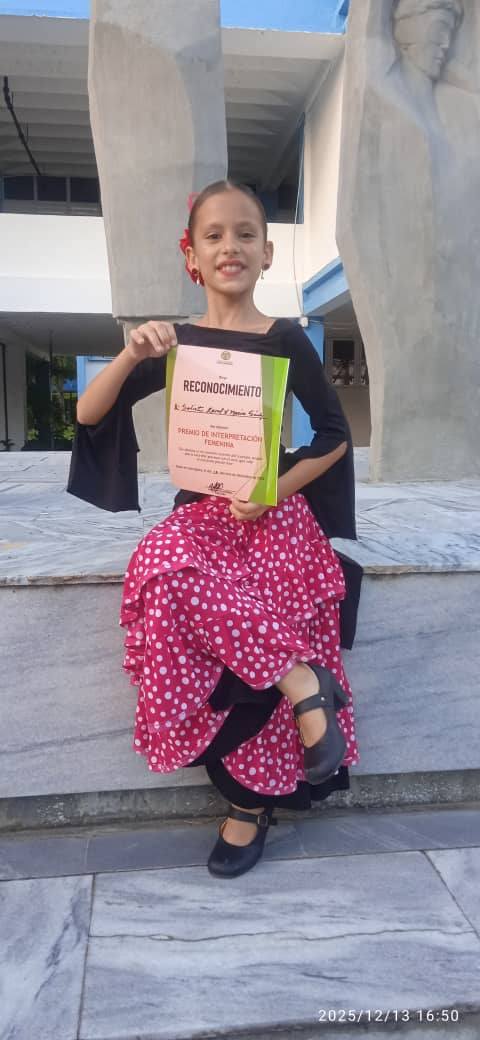
CAMAGÜEY.—When the girls of Sangre Gitana were rehearsing for their 24th anniversary gala, they could not have imagined that just weeks later the news would be very different: they had won the Grand Prize in the Children’s category at the Provincial Dance Festival. The award confirms the strength of a project built patiently from the community, with childhood at its core.
The flamenco-inspired group, part of the Ignacio Agramonte House of Culture, brings together more than fifty girls from different neighborhoods across Camagüey, all united by a single desire: to dance.
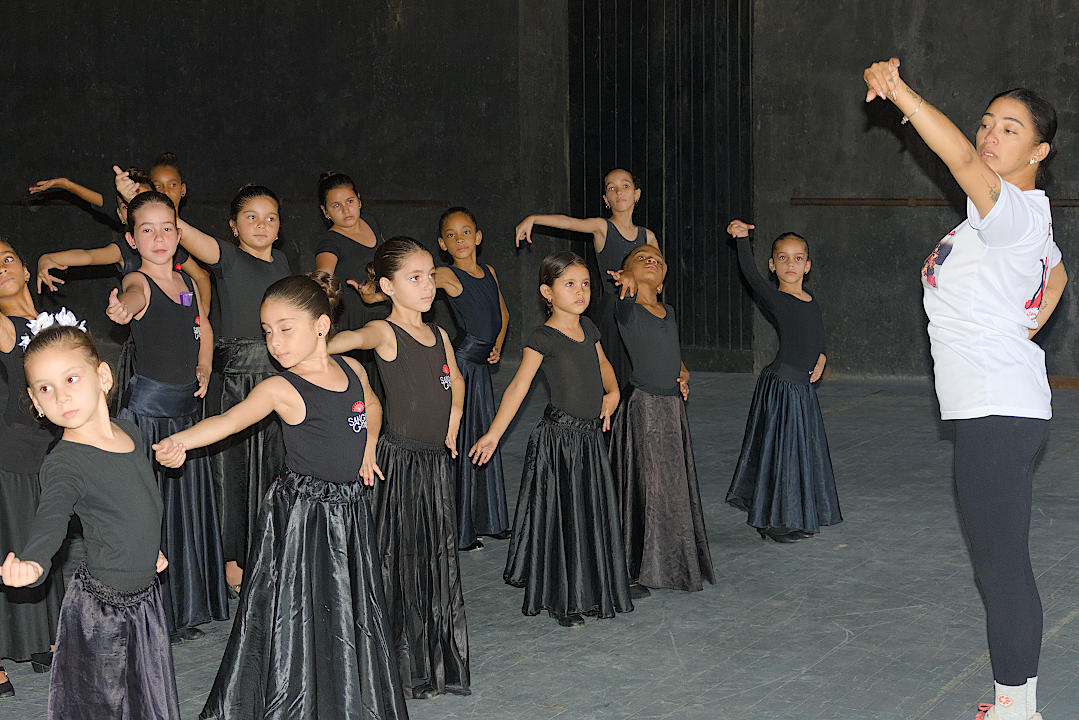
LEARNING FROM AN EARLY AGE
Before becoming its director, Dianaris Díaz Abad was once one of those girls who arrived at the project wide-eyed and full of excitement. She joined Sangre Gitana at just six years old and grew up within the group until, still very young, she had to assume artistic leadership after the project’s founder left the country.
“I suddenly found myself in charge of many girls and parents who, understandably, had doubts. I was almost a girl myself,” she has recalled.
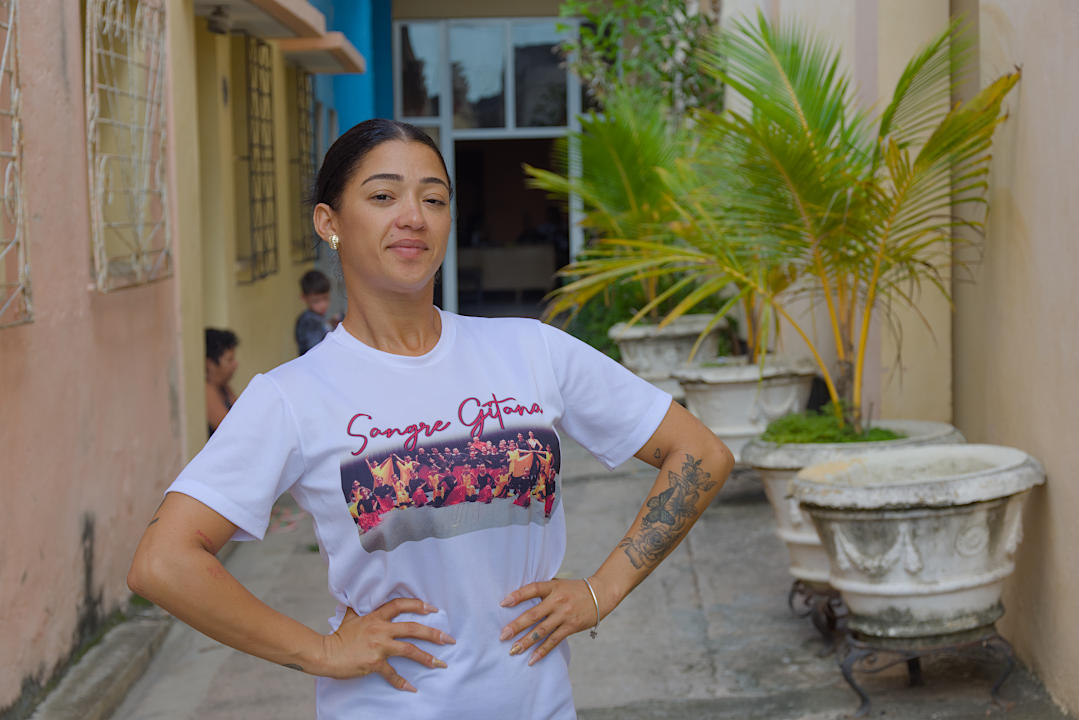
Winning their trust did not happen overnight. “Some parents believed in me, others didn’t, but I kept going.” At just 15, she was already leading the group, learning how to direct while still in training herself. More than 17 years later, that personal journey is reflected in how she guides each child and communicates with every family.
Keila María Bonet Bejerano is eight years old and studies at the Josué País school. She lives in Plaza de Méndez and joined the group two years ago, almost by chance. “My best friend was here, and I asked her if she danced somewhere like this. She told me it was Sangre Gitana, and I wanted to join too,” she says.
She rehearses on weekdays from four to six in the afternoon. The first thing she learned was caracoleo—“the most important thing”—followed by taconeo. “At home I drove my parents crazy,” she laughs. Her favorite song to dance to is Diva, and about her teacher she says, with the honesty of her age: “She’s really good.”
Five-year-old Analía Morales Sandulvides is the youngest in the group. She also attends Josué País and danced at home even before joining the project. “They’ve taught me many things, like Spanish dance and flamenco,” she says. She inherited her costume from a friend, her heeled shoes were made by a cobbler, and she assures that all the girls get along well. At the moment, her mother and grandfather are ill and bedridden, so dance has become an emotional refuge.
Estefani Daniela Chacón Rosabal, nine years old, started when she was just four. Her sister Diana, eight, is also part of the group. They live in the José Martí neighborhood and attend Juan Manuel Viamontes school. They arrived through cousins and passed the aptitude tests by “showing how we dance.”
After five years, Estefani says the hardest parts have been taconeo and arm work. At home, they rehearse together: “My sister has her choreographies, and I learn them too.” About the teachers, she says without hesitation: “They treat us very well.”
Camila Ramírez Puga is nine and one of the newest members, with just ten months in the group. She lives on Camino de la Matanza and also studies at Josué País. Even so, she feels she has already learned an essential lesson: “It doesn’t matter to impress the audience too much; if what you’re doing matters to you, that’s enough.”
Rehearsals begin with warm-ups and then move on to choreography. She arrives tired after school but never complains. Her favorite song is Mátame, and she values the family support around her: “Parents support their children very well.”
PARENTS WHO SUSTAIN THE PROJECT
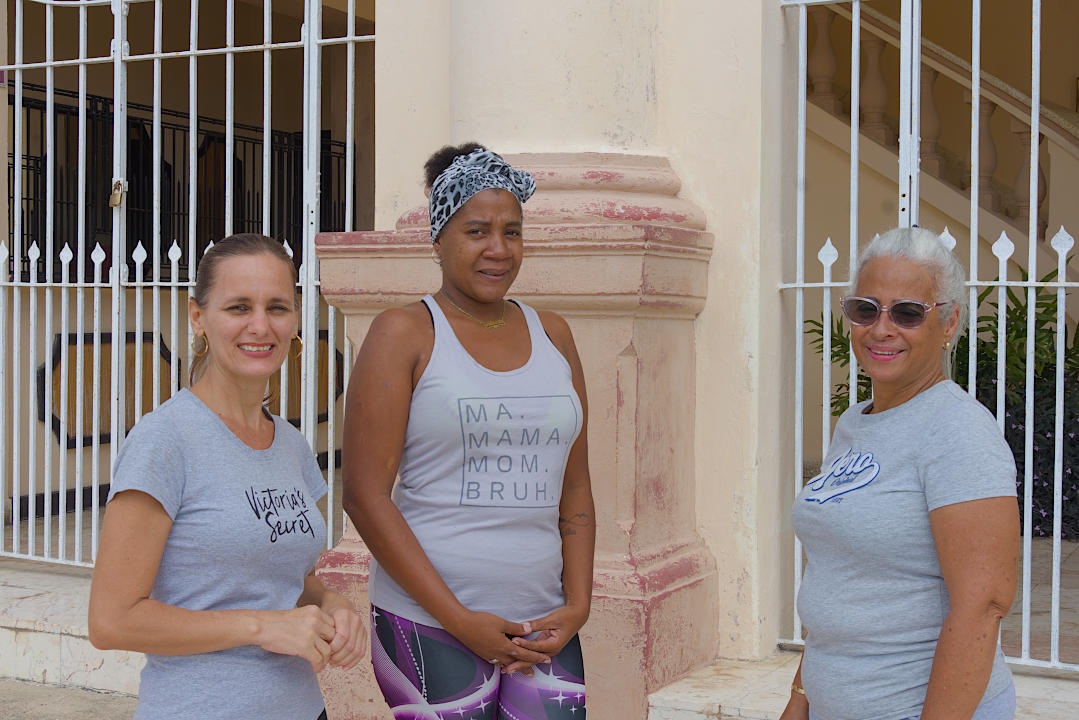
For Katherine García Vizcaíno, mother of six-year-old Aitana, bringing her daughter to Sangre Gitana was almost instinctive. She herself danced from the age of nine and knows that world from the inside. “I saw her aptitude—she improvised, listened to music and invented little steps. I took her to performances, talked to the director, and here we are.”
“I’m delighted that my daughter can continue and reach places I would have liked to reach myself,” she confesses. For her, art is also a form of protection: “The world has changed a lot. I want her to have culture, to know how to move in this environment, until she’s old enough to decide what she wants to do with her life.”
Yilian Vázquez Barceló, a theater instructor and mother of seven-year-old Patricia Viamontes, offers another perspective. Patricia joined Sangre Gitana at just three. From her professional background, Yilian supports both the group’s work and its director. “Dance and theater are closely related. We work with feelings and emotions, we bring everyday life onto the stage so they can learn to convey it,” she explains.
The girls are taught more than flamenco. Their musical ear, taste~, and bodily expression are also nurtured. “They’re shown that not everything is reggaeton, that there’s other music and other ways of expressing oneself,” she adds.
AN AWARD THAT CONFIRMS THE PATH
There is something both ancient and new in these flamenco-inspired girls. In the light tap of a heel that has yet to gain weight, in small arms learning to draw the air, coexist the memory of a centuries-old dance and the freshness of childhood. They dance with imaginary flowers, with skirts that spin like games, turning the stage into a shared courtyard where rumba, guajira, and the distant echo of Andalusia all fit. They do not imitate—they interpret. They do not portray women, but girls who feel, dream, and discover in dance a way of naming themselves.
For Dianaris, each award confirms a path that has often had to be sustained against the odds. Without a permanent headquarters, Sangre Gitana has found an essential home in the Teatro Principal. “The theater has become our house. Here we rehearse, here we grow, and here the girls learn what respect for the stage means,” she says gratefully.
Beyond technique, she insists on holistic training.
“Here they learn discipline, responsibility, and love for art. I’m very careful that the girls live their childhood, that they don’t rush stages, that they understand the stage is also a space for education.”
And so the project grows—through shared rehearsals, family support, and a community that stands behind it. “Sangre Gitana would be nothing without the parents and the children. They are my right hand, my left hand, and both my feet,” she insists. The voices of the girls (there are no boys at the moment) and those who accompany them reveal how art can be refuge, school, and future, all at once.
Translated by Linet Acuña Quilez