
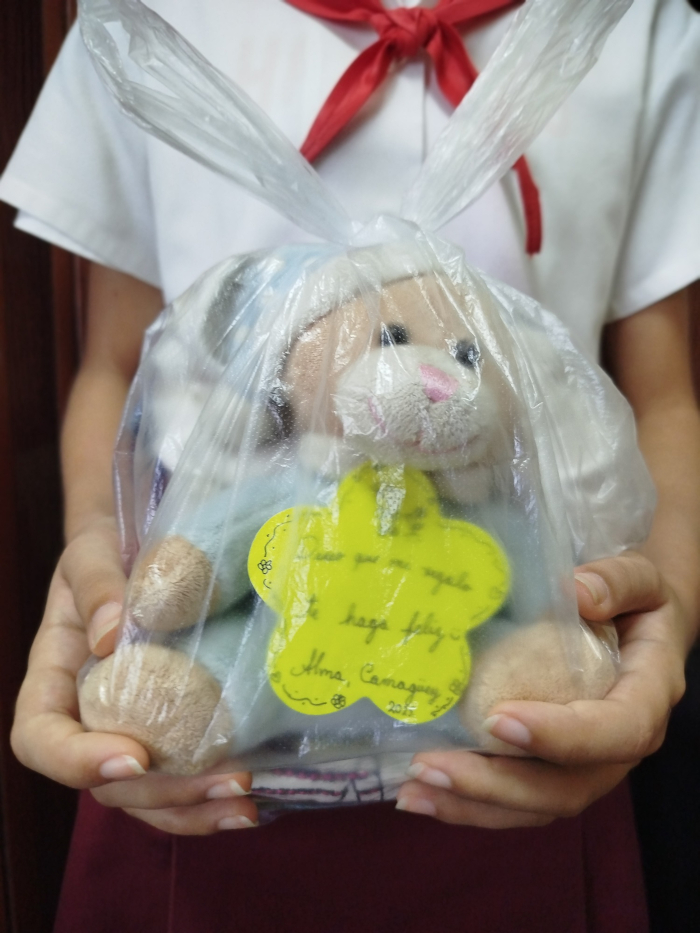
CAMAGÜEY.— My daughter came home from school with a seemingly simple request: to bring something to donate to the children in eastern Cuba who have lost everything after Hurricane Melissa. At home — still carrying the fragility of recent days, when almost all of us were sick as the storm hit — that request had a different weight.
Every image shared on social media or television hits deep. Houses covered by water up to their roofs, streets unrecognizable, entire families with no place to return to. The faces — above all, the faces — have that look that says more than a thousand words: there’s nothing left.
It wasn’t the first time. Last year, for the children of Guantánamo, we made the same gesture. Then, my daughter had to let go — almost in tears — of a beloved stuffed toy. We didn’t force her. We explained. We told her about the power objects can have when they become a source of comfort for someone else. In the end, she gave it away. And something took root inside her.
Maybe that’s why this time was different. This time, it was her idea. Before I said anything. Before any explanation.
- Mom, we need to find clothes to donate, she said early in the morning, her voice still soft from sleep.
At first, she insisted she couldn’t give away another stuffed toy, because she had “too much emotional attachment” to all of them. And I understood.
But minutes later, as we were folding the clothes, she spoke again:
- Yes, Mom… and a little stuffed toy too. Because some child needs it.
Then she took a yellow flower-shaped piece of paper and wrote, in her still-wobbly handwriting:
- I hope my gift makes you happy.
She tucked the note into the transparent bag.
Before leaving for school, she stopped for a moment. She said she had butterflies in her stomach — that she felt happy about what she’d done.
It wasn’t vanity. It wasn’t pride. It was pure joy — the kind that comes when you discover you can be useful, even just a little.
Today she’ll hand her donation to the teacher. And I, watching her grow through this gesture, think about how necessary it is to nurture solidarity. It’s not about giving things up thoughtlessly or denying the affection we have for them. It’s about making room for someone else. It is about realizing that what little we have can mean the world to another person.
I think of the parallels: A girl in the flat city of Camagüey, a boy in the eastern mountains — both with dreams, laughter, and fears. Both are deserving of warmth, tenderness, and light.
In times of such scarcity, sharing is an act of brave abundance. And maybe we can’t solve everything. Maybe we can’t give much.
But we can give something. And that something can light a warm corner in someone else’s life.
I don’t tell this to boast. I tell it because here — in my home, in my daughter — a heart is growing that knows how to look outward.
And that, in a world that so often invites selfishness, is a gift beyond measure.
Translated by Linet Acuña Quilez